Collar Creek

Dog car sickness: what actually helps

Two different problems wear the same symptoms. One is an inner ear that hasn't caught up yet; the other is a dog that has worked out where the car goes. They need opposite fixes.

By Stephen V.Updated How we research

How this is funded: we earn a commission if you buy through our links, at no extra cost to you. It never changes which product we recommend, and we’ll tell you when we’d skip one. Full disclosure.

A dog that drools, whines and throws up in the car is a dog that stops getting taken places. That is the real cost of car sickness: not the upholstery, but the walks that do not happen and the trips the dog is left out of. The good news is that most of the fixes are free, and the paid ones are things you arguably ought to own anyway.

The first job is working out which problem you have, because the two causes look identical from the driver’s seat and respond to different things.

The two causes

Motion sickness: a balance problem

The AKC explains that motion sickness in dogs is related to the sense of balance, and that it occurs most often in puppies because “the structures in the inner ear used for balance aren’t fully developed yet.” The inner ear reports movement; the eyes, looking sideways at a blurred hedge or at nothing at all, report something different. The mismatch produces nausea. This is the same mechanism that makes a person read a book in a moving car exactly once.

The useful implication: motion sickness is often outgrown as a dog matures. Many dogs stop being carsick on their own. Some never do.

Anxiety: a learning problem

The other cause is that the dog has drawn a reasonable conclusion. If the car goes to the vet, the groomer and the kennel, and nowhere else, the dog has learned what the car predicts. Stress produces drooling, panting and vomiting directly — no inner ear required.

The two feed each other, which is why waiting for a puppy to grow out of it is a risky plan. Every journey that ends in nausea is a repetition teaching the dog that the car makes it feel terrible. Left long enough, the physical problem resolves and the learned one remains.

The signs, either way

The AKC lists them as whining, drooling, licking their lips, or vomiting. Excessive drooling and lip-licking usually arrive first, which makes them the cue to act — pull over, ventilate, shorten the trip — before the journey ends badly.

The free fixes, in the order to try them

Everything in this section comes from the AKC’s carsickness guidance and costs nothing.

1. Fix what the dog can see

There are two opposite solutions and both work. The first is to place the dog in the middle of the back seat so that it is looking forward, which lines up what the eyes see with what the inner ear feels. The second is a solid-sided crate to limit the dog’s field of vision — if there is no moving scenery to disagree with, there is no conflict.

Which one suits your dog depends on the dog. A confident dog that likes looking out usually does better facing forward; an anxious one often settles faster with less to look at. Try one for a few short trips before switching.

2. Secure the dog — which you should be doing regardless

The AKC’s instruction alongside the seating advice is to secure the dog with a dog seat belt or safety harness. That is not only about sickness: the AVMA recommends the use of restraint devices for pets in moving vehicles, and an unrestrained dog is a projectile in a crash and a distraction the rest of the time. A restrained dog also physically cannot climb into the front, which is where a nauseous dog invariably wants to go.

3. Ventilate — a few inches, not a wide-open window

Lower the windows a few inches and keep the car cool and well ventilated. A stuffy, warm car makes nausea worse quickly. “A few inches” is deliberate: enough to move air through the cabin, not enough for the dog to get its head out.

4. Time the food

The AKC’s guidance is to withhold food for 12 hours before the car trip, while not restricting access to fresh water. Plan a long drive around a feed rather than skipping meals as a habit, and check with your vet first for a puppy or a dog with a medical condition that makes fasting a bad idea.

5. Bring something that smells like home

A familiar toy or blanket. It is the cheapest item on this list and it does two jobs at once: a scent anchor for an anxious dog, and something absorbent between your dog and your seat.

The fix that actually works: rebuild the car

Setup changes make journeys survivable. Desensitization is what removes the problem, and it is the same ladder the FDA and AVMA recommend for getting a dog comfortable with a crate or carrier before travel: go slowly enough that the dog never has the bad experience.

  1. Sit in the parked car with the engine off. A few minutes, quietly, with praise and gentle attention. Then get out and do something normal. Nothing happens; that is the point.
  2. Run the engine, still parked. Play, treats, calm. The noise and vibration become part of the furniture rather than the overture to a journey.
  3. Drive to the end of the driveway and stop. That is the whole session. Repeat it until it is boring.
  4. Short trips to somewhere good. The park, a friend’s house, a field — anywhere the dog wants to be. This is the step that rewrites what the car predicts.
  5. Extend gradually. If a step produces drooling or whining, go back one and stay there longer. Moving up too fast is the only real way to get this wrong.

The rule that makes the whole ladder work: for the duration of the training, the car must not only go to the vet. If the only two destinations are needles and nail clippers, no amount of driveway practice will outweigh them.

When to involve a vet

Sooner than most people do. The AKC suggests speaking to your veterinarian about medication — something for nausea or an anti-anxiety medication — and notes that some owners use natural options such as lavender, ginger and valerian. We are dog-gear enthusiasts, not vets, and we will not recommend a product or a dose for a dog we have never met.

Two situations deserve a call rather than a plan: a dog that suddenly starts being carsick when it never was before, and a dog whose distress in the car is severe rather than uncomfortable. Both are worth a professional opinion before you spend another six weeks on driveway sessions.

The gear worth owning

Nothing on this list cures car sickness. What it does is make the setup changes above possible, and make the journeys where it still happens cost you less.

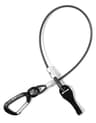
A harness is what turns “put the dog in the middle of the back seat facing forward” into something that stays true for the whole journey. A tether is the cheap way to add that to a harness you already trust — with the caveat we repeat everywhere, that a tether alone is not crash protection. And a waterproof cover is the pragmatic admission that training takes weeks.

Quick picks

Ranked on specs, value and fit. Select a row to jump to the full write-up. We have not tested these ourselves — here is exactly what we do instead.

#ProductBest forPrice
1
Kurgo Tru-Fit Smart Harness (Enhanced Strength)

Kurgo Tru-Fit Smart Harness (Enhanced Strength)

The value crash-tested pick. Kurgo crash-tests its Enhanced Strength Tru-Fit (to a 75 lb standard) and includes a seatbelt tether, at well under half the Sleepypod's price. Not CPS-certified, but a real, tested step above a bare tether.

Best restraint for a forward-facing dog
$26.99 · View on Amazon

Price as of September 15, 2026. #ad How we’re funded

2
Mighty Paw Dog Seat Belt Tether

Mighty Paw Dog Seat Belt Tether

A well-made tether to pair with a crash-tested harness — heavy-duty hardware, a chew-resistant metal casing and a swivel to stop tangling. Important: a tether restrains movement, it is not a crash-safety device on its own. Use it with a real harness.

Best cheap tether for a harness you own
$14.99 · View on Amazon

Price as of September 15, 2026. #ad How we’re funded

3
URPOWER Waterproof Hammock Seat Cover

URPOWER Waterproof Hammock Seat Cover

The value pick, and the one that converts. Zip the side flaps down and it is a hammock; zip them up and it is a flat bench cover or a cargo liner — so one purchase covers three layouts instead of forcing you to guess right. Four-layer waterproof fabric, headrest and seat anchors, and a nonslip backing, for well under half the price of the fitted names.

Best protection for the seats
$23.99 · View on Amazon

$29.9920% off

Price as of September 15, 2026. #ad How we’re funded

#1Best restraint for a forward-facing dog

Kurgo Tru-Fit Smart Harness (Enhanced Strength)

The value crash-tested pick. Kurgo crash-tests its Enhanced Strength Tru-Fit (to a 75 lb standard) and includes a seatbelt tether, at well under half the Sleepypod's price. Not CPS-certified, but a real, tested step above a bare tether.

Strengths

  • Crash-tested by the maker to a stated weight; steel nesting buckles
  • Includes a seatbelt tether in the box
  • Five adjustment points, doubles as a walking harness

Trade-offs

  • Manufacturer-tested, not independently CPS-certified like Sleepypod
  • Fit takes some fiddling to get right
Crash-testedYes — maker-tested to 75 lb
Tether includedYes
BucklesSteel nesting
Doubles asWalking harness

Specs read from the product listing on July 22, 2026. “Not published” means the brand does not state that figure.

#2Best cheap tether for a harness you own

Mighty Paw Dog Seat Belt Tether

A well-made tether to pair with a crash-tested harness — heavy-duty hardware, a chew-resistant metal casing and a swivel to stop tangling. Important: a tether restrains movement, it is not a crash-safety device on its own. Use it with a real harness.

Strengths

  • Chew-resistant metal casing and a strong bolt snap
  • Swivel clip prevents the tether twisting up
  • Cheap add-on to a harness you already trust

Trade-offs

  • A tether alone is NOT crash protection
  • Only as safe as the harness you clip it to
TypeSeatbelt tether (not a harness)
Crash-testedNo — pair with a tested harness
HardwareMetal casing, swivel snap
Attaches viaSeatbelt buckle or latch

Specs read from the product listing on July 22, 2026. “Not published” means the brand does not state that figure.

#3Best protection for the seats

URPOWER Waterproof Hammock Seat Cover

The value pick, and the one that converts. Zip the side flaps down and it is a hammock; zip them up and it is a flat bench cover or a cargo liner — so one purchase covers three layouts instead of forcing you to guess right. Four-layer waterproof fabric, headrest and seat anchors, and a nonslip backing, for well under half the price of the fitted names.

Strengths

  • Converts between hammock, bench cover and cargo liner via side-flap zips
  • Side flaps also protect the door cards from claws
  • Four-layer waterproof fabric with nonslip backing, headrest and seat anchors

Trade-offs

  • Only fits back seats close to 54 inches — measure before ordering
  • Universal fit means it will never look as tidy as a vehicle-specific cover
StyleHammock / bench / cargo (convertible)
FitsStandard — back seats near 54"
WaterproofYes — 4-layer fabric
AnchorsHeadrest + seat anchors, nonslip backing

Specs read from the product listing on August 11, 2026. “Not published” means the brand does not state that figure.

What not to bother with

  • Letting the dog ride in the front “because it seems calmer”. The AVMA’s position is that pets belong restrained in the back seat. An airbag deploying into a dog is a worse outcome than a nauseous journey.
  • Head out of the window. It looks like relief and it is an eye and airway injury waiting to happen. A few inches of open window achieves the ventilation without the risk.
  • Going cold turkey on car journeys. Stopping driving with the dog entirely feels kind and cements the association. Short, pleasant, frequent trips are the treatment.
  • A loose dog on a towel. It solves nothing and removes the one thing — restraint — that both the AKC and the AVMA actually ask for.

General guidance, not professional advice. Collar Creek is written by a dog-gear enthusiast, not a vet or a certified trainer. For behavior problems, an injury, or a medical question, talk to a professional. Always check fit, and supervise any new gear at first.

Frequently asked questions

Why does my dog get carsick?

Usually one of two reasons. Motion sickness is a balance problem — the AKC explains that it is related to the sense of balance and shows up most often in puppies, because the structures in the inner ear used for balance are not fully developed yet. The other cause is psychological: a dog that only ever goes to the vet in the car learns what the car means, and the anxiety produces the same drooling and vomiting. Many dogs have a bit of both.

Will my dog grow out of car sickness?

Many do. Because the common cause in puppies is an inner ear that has not finished developing, a lot of dogs stop being carsick as they mature. Some never do. The reason not to simply wait it out is that every miserable journey in the meantime teaches the dog that car equals nausea — which converts a physical problem into a learned one that outlasts the original cause.

Where should a carsick dog sit in the car?

The AKC gives two options that work in opposite ways: place the dog in the middle of the back seat so it looks forward, or use a solid-sided crate to limit its field of vision entirely. Either resolves the mismatch between what the inner ear feels and what the eyes see. Whichever you choose, secure it — the AKC says to use a dog seat belt or safety harness, and the AVMA recommends restraint in the back seat regardless.

Should I feed my dog before a car journey?

The AKC's guidance is to withhold food for 12 hours before the car trip, but not to restrict access to fresh water. An empty stomach gives motion sickness less to work with. For a long drive, plan the feed around the journey rather than skipping meals repeatedly, and if your dog has a medical condition that makes fasting unwise, ask your vet first.

Do open windows help with dog car sickness?

Yes — the AKC recommends lowering the car windows a few inches and keeping the car cool and well ventilated. A few inches is the operative phrase: enough to equalize air pressure and move fresh air through, not enough for a dog to get its head out, which is a separate and serious risk.

What can I give my dog for car sickness?

That is a vet question, not a gear question. The AKC suggests speaking to your veterinarian about medication for nausea or anti-anxiety medication, and notes that some owners use natural options such as lavender, ginger and valerian. We are not vets and will not recommend a dose or a product. Do the free setup changes and the desensitization work first — they fix the cause rather than the symptom.

Sources

Keep reading