What $25 buys, by type
Buy the type first and the brand second. These are the five shapes of leash that matter, what each one is for, and what the band gets you. Prices as of November 22, 2026.
| Type | What it is for | Our pick under $25 | Best for |
|---|
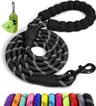
| Padded rope, 4-6 ft | Everyday walking, the default | BAAPET Padded-Handle | Almost every dog and owner |
| Flat nylon, two handles | Close control near roads and crowds | Max and Neo Double Handle | Strong dogs, city walks |
| Long line, 15-50 ft | Recall training at distance | NIMBLE Waterproof Recall Lead | Training in wet grass and mud |
| Retractable, 16 ft | Sniffing room in open space | Fida Large Breed 16 ft | Trained dogs, open parks only |
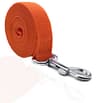
| Plain rope or nylon | Spare, car leash, loaner | Taglory Rope / TAIAN Nylon | The glovebox and the back door |
The full argument for each type, including the ones above this band, is on the leash buying guide.
The three things worth checking at this price
Cheap leashes fail in predictable places, and all three are visible in the listing before you buy.
- The snap.This is the part that actually fails. A heavy-duty metal clasp — which the Max and Neo publishes — is worth more on a strong dog than any amount of webbing. A standard bolt snap is fine for a normal dog and under-specified for a giant breed that lunges.
- The handle. Padding is not a luxury; it is what stops a rope burning your palm when a dog hits the end of the leash. Every pick here except the long line has a padded handle, and the long line omits it on purpose because it is designed to run through your hands.
- Reflectivity. Free at this price and the one feature with a safety case behind it. Four of the six picks publish reflective stitching or threading. If you walk at dusk, treat it as mandatory and add a light or LED collarfor the dog’s end.
Length decides more than price does
Six feet is the default for a reason: it is long enough for a dog to move naturally beside you and short enough that you keep the dog out of a road. Four feet is better in a city. Two feet is a traffic lead, and a second handle 18 inches above the clip — the Max and Neo’s design — gives you that without owning two leashes.
A long line is a different tool, not a longer leash. It exists so a dog can be thirty feet away and still under control while you teach a recall, and the one thing that ruins a cheap one is water: soft nylon soaks up mud and smell until you stop wanting to hold it. The NIMBLE is PVC-coated for exactly that reason, and the trade-off is stated honestly in its own listing — coated webbing is stiffer in the hand and can rope-burn without gloves. Our long line picks cover the category properly.
About the retractable
We include one and we are not enthusiastic about it. A retractable keeps tension on the line at all times, which teaches a dog that pulling extends the leash — the opposite of what you want — and the AKC’s own guidance is to teach loose-leash walking on a fixed six-foot leash first. Thin cord versions also cut hands.
If you are buying one anyway, buy the sane version: the Fida uses reflective tape rather than cord, has a one-touch brake you can work with a thumb, and is rated to 110 lb, which makes it the least objectionable retractable in the band. Use it in open space with a trained dog, never on a pavement beside traffic. The full case is on the retractable leash page.
What we would actually buy
One leash for one dog: the BAAPET at six feet. It is the whole job done for a fraction of the ceiling.
A strong dog in a city: the Max and Neo, for the traffic handle and the metal clasp.
A dog you are teaching to come back: the BAAPET for walks and the NIMBLE long line for training. Both together still land under $30, which is the argument for buying the pair rather than one expensive leash.
A spare for the car: the Taglory, or the TAIAN below it. A second leash in the glovebox costs the price of a coffee and solves the day you leave the good one at home.
And if your dog pulls hard enough that you are shopping for a leash to fix it, the leash is the wrong purchase — the leash for pullers page and how to stop leash pulling are the honest answers, and a front-clip harness does more than any strap can.