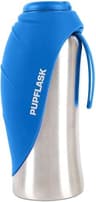
How much water does your dog need on a walk?
There is no honest universal number — it depends on size, temperature, effort and coat. What is reliable is the pattern: offer water little and often rather than letting a dog gulp a large volume after a long dry period, and offer it before your dog looks like it needs it. Practical guidance for buying:
- Small dog, neighborhood walks: 12–19 oz is plenty and the lighter bottle is the one you will actually carry.
- Medium dog, an hour or two: around 20–24 oz.
- Large dog or a hot day: 24–27 oz minimum, and expect to refill.
- All-day hike: a bottle for the dog and a reservoir for refills — or put the water in a dog pack and let the dog carry it.
Leaks are the real quality test
Every bottle here claims to be leak-proof, and the claim is load-bearing, because this thing lives in a bag with your phone. What makes the difference is a positive lock — a switch or valve you deliberately close — rather than relying on a lid seal alone. Both the insulated MalsiPree and the Springer bottle name a specific locking or shut-off mechanism in their listing, and that is the feature to look for.
Insulated or not?
Plastic bottles are lighter and cheaper; stainless steel is more durable and does not hold smells. But only a double-walled insulated stainless bottle keeps water cool — plain steel warms up nearly as fast as plastic. If your walks are short, this does not matter. If you hike in real summer heat, it is the difference between offering your dog cool water at mile four and offering it something the temperature of a warm bath, which many dogs simply refuse.
Cleaning
The trough or bowl is the part that gets slobbered in and it is the part people forget. Rinse it after each walk and give it a proper wash weekly; biofilm in a warm plastic trough is genuinely unpleasant. Most of these are top-rack dishwasher safe, which is worth checking before you buy — a bottle you have to scrub by hand gets cleaned less often.