Who tested what
| Product | What it is | Test evidence | Also works as |
|---|
| Sleepypod Clickit | Harness, seat belt threads through it | Center for Pet Safety top rating — independent | Walking harness |
| Kurgo Enhanced Strength Tru-Fit | Harness plus tether in the box | Crash-tested by the maker to a stated 75 lb standard | Walking harness |
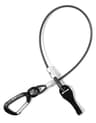
| Mighty Paw seat belt tether | Tether only | None — pair it with a tested harness | Nothing; it is a connector |
| Cooyoo retractable tether | Retractable tether only | None, and the stretch works against you | Stopping a dog roaming the cabin |
The gap between rows one and two is the gap between independent testing and self-certification. Kurgo publishing a crash test to a 75 lb standard and including the tether is a real step above an untested vest, at well under half the Sleepypod’s price — it is simply not the same class of claim as a CPS top rating. Our crash-testing explainer covers what those protocols involve and why so few products pass.
Why a retractable tether is the wrong idea
Worth being blunt, because it is the cheapest thing in the category and it sells well. A crash is an energy problem: the restraint has to stop the dog over the shortest possible distance, in line with the seat. A retractable or elasticated tether does the opposite — it lets the dog accelerate forward before anything stops it, and then arrests it with light hardware.
It is fine for what it actually does, which is stop a dog climbing into the front seat on a twenty-minute drive. Just do not file it under safety, and do not clip it to a collar: a tether on a flat collar loads a dog’s neck in exactly the event you bought it for.
Where the dog sits, which is free and matters more than the gear
- Back seat, always. The AVMA is specific that the safest place is the back seat, restrained. A front-seat airbag deploys with enough force to injure a dog badly.
- One dog, one restraint.Two dogs sharing a tether, or a tether running across both, turns one dog’s movement into the other’s problem.
- Short enough that the dog cannot reach the footwell. A tether long enough to let a dog stand up and move between seats is long enough to let it be thrown.
- Introduce it before the trip.The AVMA’s travel guidance and the FDA’s travel-training advice both say the same thing: a crate, carrier or harness should be familiar before it is used on a journey. A dog meeting a car harness for the first time at the start of a six-hour drive is a dog that will fight it for six hours.
Harness, crate or barrier?
A harness is the right answer for most cars and most dogs, but it is not the only one. A crash-tested crate in the cargo area is the gold standard for a big dog in an SUV; a barrier keeps a dog out of the cabin without restraining it at all. We compare the first two directly in crate versus harness in the car, and the barrier picks explain what a barrier does and does not do.
Two cases where the answer changes. A small dog is often better in a crash-tested carrier strapped to the back seat than in a harness built for a 40-pound body — see the small-dog car seat picks. And a puppy should be acclimatised in short, boring trips before any of this matters; puppy car safety covers that sequence, including why the first few drives should go nowhere interesting.
One harness or two?
Both tested harnesses here double as walking harnesses, which sounds like the efficient choice and sometimes is not. A car harness is built to spread crash load, so it is broader and stiffer than a walking harness, and a dog that wears it all day in the house is wearing a vest designed for ten minutes of travel. The honest answer depends on how much you drive: if the dog is in the car daily, one dual-purpose harness is fine and we compare the trade-offs in car and walking harnesses. If the car is a weekly event, keep the walking harness you already have and buy the car restraint separately.
What we would actually buy
If the dog travels often and you want the best available evidence, the Sleepypod Clickit. A CPS top rating is the only independent result anyone in this category has, and the wide vest is doing the thing that matters: moving crash force onto the chest and off the neck. It is bulkier to put on than a tether, and that is a one-minute cost.
For most people, the Kurgo Enhanced Strength Tru-Fit. Crash-tested by the maker to a stated weight, steel nesting buckles, five adjustment points, and the tether is in the box, for well under half the price. Not CPS-certified, and a real step above an untested vest.
If you already own a harness you trust, the Mighty Paw tether is the correct purchase: a chew-resistant metal casing, a swivel so it does not twist, and a strong bolt snap. It is a connector, and it inherits the safety of whatever it is clipped to.
And the Cooyoo retractable, honestly: buy it only if the problem you are solving is a dog that climbs into the front, and understand that the stretch is the opposite of what a crash needs. For a few dollars more, the Mighty Paw does the same containment job without the elastic.