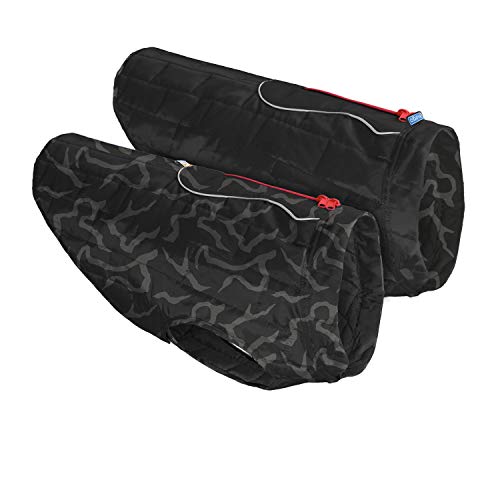
Which dogs actually need a coat
| Almost certainly needs one | Probably does not |
|---|
| Small and toy breeds | Northern breeds with thick double coats |
| Thin-coated and hairless breeds | Large, heavy-coated working dogs |
| Puppies | Healthy adult dogs in mild winters |
| Senior dogs of any breed | Dogs that are running hard rather than walking |
| Dogs with arthritis or chronic conditions | |
If you are genuinely unsure, the AKC’s own advice is to ask your vet about your specific dog rather than guessing from the breed — a reasonable position, since coat thickness varies enormously within breeds.
Warm coat or waterproof coat? They are different products
This is where most of the money gets wasted. An insulated jacket keeps heat in on a cold dry day. A rain shell keeps water out. The premium coats in this category are usually the former and are explicitly only water-resistant— Ruffwear positions the Stumptown for clear cold days, and Kurgo describes the Loft as water-resistant rather than waterproof.
The budget coats, oddly, are more often waterproof and fleece-lined at the same time, because that is what sells. If your winter is wet and around freezing rather than dry and well below it, a cheap waterproof fleece-lined coat may be more useful than an expensive insulated one. If it is properly cold and dry, the insulation figure is the number that matters — and almost nobody publishes it.
The features that actually matter
- How it goes on. A back zip is quick if the dog stands still. Hook-and-loop closures are quicker on a wriggler but collect fur and lose grip over a season or two. Side-release buckles — the Ruffwear approach — avoid anything going over the head, which matters for a stiff or arthritic dog.
- Harness access. If your dog wears a harness, you want a leash portal or a zip so you clip through the coat. Otherwise you are either putting the harness over the coat, where it slips, or taking the coat off to re-rig every time.
- Belly coverage. Most of a dog’s heat loss in wet snow comes from underneath. Coats that only cover the back keep the dog looking warm rather than being warm.
- Reflective detail. Winter walks happen in the dark. Every pick here has some; the budget ones often have more than the premium.
- Machine washable. A winter coat gets muddy weekly. Check before you buy — some premium shells want gentle treatment.
Sizing a coat
Coats are sized on back length— from the base of the neck to the base of the tail — plus chest girth. Both matter, and back length is the one people forget. A coat that is too long interferes with toileting; too short and the whole hindquarters are exposed.
The between-sizes rule for coats is the opposite of harnesses: size up. A slightly large coat still keeps a dog warm and can be cinched at the belly. A slightly small one binds at the shoulders and the dog will refuse to wear it. Kuoser says the same thing on its own listing.
What a coat does not fix
Cold paws. Salt and grit on treated pavements are a real winter problem and a coat does nothing about them — that is boots, or rinsing paws when you get in. Nor does a coat make it safe to be out for longer than the AKC’s windchill guidance suggests; it extends comfort, not endurance.