Collar Creek

How to keep a dog cool in the car while you drive

Your air conditioning is measured at the dashboard. The dog is behind the seats, often above the exhaust tunnel, on dark upholstery, in direct sun through a window with no shade — which is a different car from the one you are sitting in.

By Stephen V.Updated How we research

How this is funded: we earn a commission if you buy through our links, at no extra cost to you. It never changes which product we recommend, and we’ll tell you when we’d skip one. Full disclosure.

The dangerous version of this question is the parked car, and we answer it separately in how hot is too hot to leave a dog in the car — the short version is that there is no safe temperature, a 70 F day can put the inside of a car near 100 F in twenty minutes, and cracking a window changes almost nothing. This page is about the other version: the dog is with you, the engine is running, the air conditioning is on, and you still want to know whether the dog in the back is actually cool.

Often it is not, for four structural reasons that have nothing to do with your settings. Cabin temperature is sensed near the dashboard. Cold air falls and gets drawn forward to the front vents. The rear of an estate or SUV sits further from those vents, closer to the drivetrain, and under the largest unshaded glass in the vehicle. And the dog is lying down — on upholstery, a liner or a bed that has been absorbing sun since you parked.

The free fixes, in order of how much they do

  • Pre-cool for two minutes. Windows down, fan on, let the superheated air out before the dog gets in. Loading a dog into a car that has been sitting in a parking lot means it starts the drive already too warm, and dogs shed heat slowly once they are behind.
  • Open and aim the rear vents.Then put your hand where the dog lies and check. This is the single most common miss: the rear vents are closed or pointed at the ceiling, and the dial on the dash says 68 F.
  • Shade the glass the dog is next to.Not the windscreen — the side or rear window beside the dog. A stick-on shade or a towel clipped over the glass removes direct sun from the dog’s body, which is worth more than a couple of degrees of air temperature.
  • Take the plush bedding out.A fleece blanket or a padded bed is insulation: it holds the dog’s own heat against it. In summer the right surface is a hard one, a cooling mat, or a cargo liner over bare boot floor.
  • Drive at the right end of the day.The AKC’s summer guidance is about shade, water and timing — and for a long journey, timing is the one with the biggest effect. Early morning and late evening are a different trip.

Which dogs have less margin than yours

Panting is a dog’s air conditioning, and some dogs have much less of it. The AKC’s overheating guidance puts flat-faced breeds at the front of the queue — bulldogs, pugs, boxers, French bulldogs — followed by overweight dogs, thick double-coated breeds, puppies, seniors and any dog with heart or airway disease. For those dogs, everything above stops being optimisation and becomes the plan: travel cool hours, keep journeys short, stop more often.

Know the signs, because they appear in order and the early ones are easy to explain away. Heavy frantic panting that does not settle, thick drool, a bright red tongue, restlessness, then stumbling, vomiting and collapse. The panting-and-drool stage is where you act. Heatstroke is an emergency: shade and airflow, cool — not iced — water, wet the coat with cool water, and call a vet. VCA’s heatstroke material and the AKC’s both make the same point that cooling too aggressively with ice can be counterproductive.

The gear that actually helps

Three things, and none of them is a substitute for the vents and the shade. A cooling surface under the dog instead of a hot one, something that keeps drinking water genuinely cool rather than blood-warm, and — for a dog in a cargo area — a liner that is not a heat sponge. Here is what we would buy from our own registry, with live prices.

Two cooling surfaces using different technologies, plus the only insulated bottle we stock. Buy the mat that matches the space the dog travels in, not the one with the biggest cooling claim.

Quick picks

Ranked on specs, value and fit. Select a row to jump to the full write-up. We have not tested these ourselves — here is exactly what we do instead.

#ProductBest forPrice
1
Pbed Ice-Silk Cooling Mat with Bolster

Pbed Ice-Silk Cooling Mat with Bolster

The compromise most dogs actually want: an ice-silk cooling face over soft filling, with a bolster to rest a head on. A bare gel slab is cooler and a bed is comfier; this is the one a dog will choose to lie on all summer.

Best for a car seat
$14.99 · View on Amazon

$19.9925% off

Price as of October 5, 2026. #ad How we’re funded

2
Arf Pets Solid Gel Self-Cooling Mat

Arf Pets Solid Gel Self-Cooling Mat

The gel mat, which is a different technology from the fabric ones: pressure activates the gel, the dog's own weight starts the cooling, and it recharges itself after fifteen or twenty minutes off it. No water, no electricity, no freezer.

Best for a crate or cargo area
$49.99 · View on Amazon

$73.0032% off

Price as of October 5, 2026. #ad How we’re funded

3
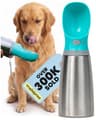
MalsiPree Insulated Stainless Dog Water Bottle (24 oz)

MalsiPree Insulated Stainless Dog Water Bottle (24 oz)

The one to buy for hot weather, because it is the only bottle here that is insulated stainless steel rather than plastic. Water you filled at home is still cool at mile four instead of blood-warm, which matters when the whole reason you are carrying it is heat. Same one-handed fill-and-return mechanism, with a lock to stop leaks in a bag.

Best water bottle for a hot drive
$27.99 · View on Amazon

Price as of October 5, 2026. #ad How we’re funded

#1Best for a car seat

Pbed Ice-Silk Cooling Mat with Bolster

The compromise most dogs actually want: an ice-silk cooling face over soft filling, with a bolster to rest a head on. A bare gel slab is cooler and a bed is comfier; this is the one a dog will choose to lie on all summer.

Strengths

  • Cooling face plus real padding and a head bolster
  • Non-slip dotted base stops it sliding on hard floors
  • Four sizes, including one that fits a car seat

Trade-offs

  • The padding works against the cooling — less effective than a gel mat
  • Bolster makes it bulkier in a crate
TypeIce-silk face, padded, bolstered
Small size21 x 17 in
BaseNon-slip dots
UseCrate, sofa, car seat

Specs read from the product listing on August 22, 2026. “Not published” means the brand does not state that figure.

#2Best for a crate or cargo area

Arf Pets Solid Gel Self-Cooling Mat

The gel mat, which is a different technology from the fabric ones: pressure activates the gel, the dog's own weight starts the cooling, and it recharges itself after fifteen or twenty minutes off it. No water, no electricity, no freezer.

Strengths

  • Pressure-activated gel actually drops surface temperature
  • No water to fill, no power, no freezer time
  • Works in a crate, a car footwell or on top of an existing bed

Trade-offs

  • Heavy and it does not fold — this is not a travel mat
  • Most expensive option here, by a factor of two
TypeSolid gel, pressure activated
PowerNone required
MaterialsStated non-toxic, lab tested
UseCrate, car, on top of a bed

Specs read from the product listing on September 29, 2026. “Not published” means the brand does not state that figure.

#3Best water bottle for a hot drive

MalsiPree Insulated Stainless Dog Water Bottle (24 oz)

The one to buy for hot weather, because it is the only bottle here that is insulated stainless steel rather than plastic. Water you filled at home is still cool at mile four instead of blood-warm, which matters when the whole reason you are carrying it is heat. Same one-handed fill-and-return mechanism, with a lock to stop leaks in a bag.

Strengths

  • Insulated stainless steel — water stays cool rather than warming in the sun
  • One-hand operation; unused water flows back into the bottle
  • Reliable lock for leak-free carrying, in food-grade BPA-free materials

Trade-offs

  • Heavier than the plastic squeeze bottles
  • Costs more than twice the cheapest bottle that does the same basic job
Capacity24 oz
MaterialInsulated stainless steel
TypeBuilt-in bowl, one-hand fill and return
Leak-proofYes — locking mechanism

Specs read from the product listing on August 11, 2026. “Not published” means the brand does not state that figure.

Stops, water and the rule that does not bend

On a long drive the stops are where heat gets managed, and the mistake is treating them as fuel breaks. Pull in somewhere shaded, open the doors rather than just the windows, and offer water every time whether or not the dog asks — the AKC’s road-trip guidance treats water and a collapsible bowl as standard kit for exactly this. Our road trip checklist has the full packing list.

And the rule, which is the same one the parked-car page ends on: when you get out, the dog gets out. Not with the engine running, not with the air conditioning on, not for five minutes. Engines stall, systems fail, dogs stand on controls, and the failure mode is fatal rather than inconvenient.

None of this cancels restraint

One more thing, because the two goals can pull against each other. The coolest place in a moving car is not the dog’s head out of a window, and a dog loose in the cabin chasing the breeze is both an injury risk and a distraction. The AVMA’s guidance on pets in vehicles is to restrain a dog in the back seat in a crate, carrier or harness — so solve heat with vents, shade and surfaces, and keep the restraint exactly as it was.

If your dog travels in the back of an SUV, that is the hottest part of the vehicle and also the one with the least airflow when the boot is loaded. Leave a gap around the crate, do not pack luggage against the vents or over the dog, and read crate versus harness if you are deciding where the dog should ride in the first place.

General guidance, not professional advice. Collar Creek is written by a dog-gear enthusiast, not a vet or a certified trainer. For behavior problems, an injury, or a medical question, talk to a professional. Always check fit, and supervise any new gear at first.

Frequently asked questions

How do I keep my dog cool in the car while driving?

Four things, in order of effect and all free: pre-cool the car for two minutes before the dog gets in, point the rear vents at the dog and check they are open, shade the window the dog is actually beside, and swap any plush bed or blanket for a hard or cooling surface. Then add water at every stop. Gear helps at the margins, but a closed rear vent and a fleece blanket undo any of it.

Does air conditioning reach the back of the car?

Much less than you would think, and in a cargo area often barely at all. Cabin temperature is sensed near the dashboard, cold air falls and is drawn forward, and the rear of an estate or SUV is further from the vents, closer to the drivetrain and usually has the largest unshaded glass. If your dog travels in the back, open and aim the rear vents deliberately rather than assuming the setting on the dial applies to it.

Is it safe to leave a dog in the car with the engine running and the AC on?

No, and this is the one place we will not hedge. Engines stall, air conditioning systems fail, and a dog can knock a control. The AKC's figures on parked cars are stark - a car at 70F can reach about 100F in 20 minutes - and it notes that cracking a window changes almost nothing. The rule is that the dog leaves the car when you do.

What are the first signs a dog is overheating in the car?

Heavy, frantic panting that does not settle, thick drool, a bright red tongue and gums, restlessness or an inability to get comfortable, then stumbling, vomiting or diarrhea, and collapse. The AKC's overheating and heatstroke guidance treats the panting-plus-drool stage as the point to act, not to watch. Heatstroke is a veterinary emergency: get into shade and airflow, offer cool - not iced - water, wet the dog with cool water, and call a vet.

Do cooling mats work in a car?

Yes, for the specific thing they do, which is removing a hot surface from under the dog. A plush bed or a folded fleece on a sun-warmed seat traps heat against the body; a gel mat or an ice-silk pad gives a cooler surface instead. They are not air conditioning and they do not lower the car's temperature. Gel mats recharge after fifteen or twenty minutes off the dog, and fabric cooling mats lose their chill as they warm under the dog - which is why the washable one is the one that gets used all summer.

Which dogs overheat fastest in a car?

Flat-faced breeds first - bulldogs, pugs, boxers, French bulldogs - because panting is a dog's cooling system and a short muzzle makes it less efficient. Then overweight dogs, thick double-coated breeds, puppies, seniors, and any dog with heart or airway problems. If your dog is in one of those groups, travel early or late, and treat the margins on this page as much narrower.

Should I open the windows instead of using air conditioning?

Open windows help when the outside air is cooler than the car, and do very little when it is not - moving hot air over a dog is not cooling it. Either way, a dog's head should not be out of a window: it is an eye and debris injury risk, and the AVMA's guidance on pets in vehicles is that a dog should be restrained in the back seat, which rules the posture out. Use the vents, shade the glass, and crack a window for airflow rather than for the view.

Sources

Keep reading