Collar Creek

The dog road trip checklist

A day trip and a twelve-hour drive are different problems. Most of what goes wrong on the long one is decided before you leave the driveway.

By Stephen V.Updated How we research

How this is funded: we earn a commission if you buy through our links, at no extra cost to you. It never changes which product we recommend, and we’ll tell you when we’d skip one. Full disclosure.

A dog that is fine on the twenty-minute drive to the park is not automatically fine on a ten-hour drive to the coast. Duration changes almost everything: hydration, bladder, motion sickness, temperature management and boredom all become real, and the margin for improvising disappears somewhere around hour four on a motorway.

This is the list we would actually work through. It assumes the restraint question is settled — if it is not, start with crate vs harness in the car and come back.

Before you leave

  • Check the ID. Current phone number on the tag, and a microchip registered to details you still use. A dog is most likely to bolt somewhere unfamiliar, which is the entire premise of a road trip. See our ID tag guide.
  • Print the vaccination record. Boarding kennels, some campsites and any emergency vet will ask, and a phone with no signal is not a document.
  • Find the vets on the route. Two or three, roughly evenly spaced, saved offline. Ten minutes now against a bad hour later.
  • Do a shorter drive first. If the dog has never done more than half an hour, an hour-long trip a week before tells you what you are dealing with.
  • Light meal, few hours before. Not a full stomach immediately before, and not an empty one either.

What goes in the car

ItemWhy
Water + a bowl that does not tipThe single most-forgotten item; offer small amounts at every stop
Food in measured portionsBagged per meal so you are not weighing food on a verge
Medication, in datePlus one spare dose, in case the trip overruns
Spare leash and collarLeashes get left at services; a spare costs three dollars
Waste bags — more than you thinkVerges and service areas rarely provide them
Old towelRain, sickness, a river the dog found. Non-negotiable
Bedding that smells of homeA familiar smell settles a dog faster than anything you can buy
First-aid kitSee our kit picks

Stops: every two to three hours

A stop is a toilet break, a short leg stretch and a drink. It is not a walk. A proper walk mid-journey wakes a settled dog up and makes the next leg harder, which is the opposite of what you want — ten minutes on a leash near the car does more good than half an hour of exploring.

Leash on before the door opens, every single time. Service areas are surrounded by fast roads and a dog in an unfamiliar place with a car door open is the classic way to lose one. If the dog travels in the boot, clip the leash through a barrier or crate door before you lift the tailgate.

Offer water at every stop, in small amounts. A dog that has not drunk for four hours and is then given a full bowl will often drink too fast and bring it straight back up.

Heat is the thing that kills

The one absolute rule of a road trip with a dog: the dog does not stay in a parked car in warm weather. The AKC’s figures are that a car parked in 70F weather reaches about 100F inside in twenty minutes, and that cracking a window changes that very little.

Plan the stops around it. Drive-through food, or one person stays with the dog and the engine running, or you eat somewhere the dog can come. This is not a rule that bends for “just five minutes” — twenty minutes is the number in the guidance and five is not far off it on a hot day. Our hot car guidecovers the numbers and what to do if you find someone else’s dog in one.

In the car itself, remember the boot of an SUV is the worst-ventilated space in the vehicle. Air conditioning that keeps the cabin comfortable does not necessarily reach a dog behind a barrier.

Motion sickness

Very common, especially in young dogs, and it usually improves with exposure. The practical fixes are all cheap: cool cabin, some fresh air, a forward-facing position where the dog can see out but is not watching the world flash past sideways, and a light stomach.

Drooling and lip-licking come before vomiting, which gives you a window to pull over. If the dog reliably gets sick on every journey, that is worth a conversation with your vet before a long drive rather than after. Our car sickness guide goes through the desensitization ladder properly.
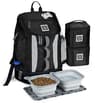
The three things most likely to be missing on the day. A travel bag keeps the food, bowls and records in one place instead of loose in the boot; a proper travel water bottle means you can offer a drink anywhere without a bowl; and if the dog rides in a load bay, a liner is what stops the trip home smelling like a wet dog.

Quick picks

Ranked on specs, value and fit. Select a row to jump to the full write-up. We have not tested these ourselves — here is exactly what we do instead.

#ProductBest forPrice
1
Mobile Dog Gear Drop-Bottom Week Away Backpack

Mobile Dog Gear Drop-Bottom Week Away Backpack

The one that solves the actual problem — a separate drop-bottom compartment so wet towels and muddy boots don't ride with the food. Ballistic polyester, two lined food carriers and two collapsible bowls included.

Best travel organizer
$44.99 · View on Amazon

$79.9944% off

Price as of September 15, 2026. #ad How we’re funded

2
Springer Classic 22 oz Dog Water Bottle

Springer Classic 22 oz Dog Water Bottle

The classic squeeze-and-return bottle, from the brand formerly called Highwave. Squeeze, the built-in bowl fills; release, and the water your dog did not drink goes back in rather than onto the pavement. A leak-tight shut-off valve and a body that fits a standard car cup holder make it the easiest one to actually keep with you.

Best travel water bottle
$24.99 · View on Amazon

Price as of September 15, 2026. #ad How we’re funded

3
PETICON SUV Cargo Liner with Bumper Flap

PETICON SUV Cargo Liner with Bumper Flap

The one that actually covers what gets damaged. Four quilted waterproof layers across a 53 x 79 in floor, a 40 x 12.6 in side flap for the trim panels a dog scrabbles at, and a bumper flap for the paint that gets scratched on the way in.

Best cargo liner
$44.99 · View on Amazon

Price as of September 15, 2026. #ad How we’re funded

#1Best travel organizer

Mobile Dog Gear Drop-Bottom Week Away Backpack

The one that solves the actual problem — a separate drop-bottom compartment so wet towels and muddy boots don't ride with the food. Ballistic polyester, two lined food carriers and two collapsible bowls included.

Strengths

  • Drop-bottom section keeps wet and dirty gear away from food and bedding
  • Comes with two lined food carriers, two silicone bowls and a placemat
  • Ballistic polyester is the toughest fabric in this group

Trade-offs

  • The listing states no overall capacity figure, so pack-volume is guesswork until it arrives
  • Backpack straps are padded but basic — it's a bag, not a hiking pack
TypeBackpack, drop-bottom
Included2 lined food carriers, 2 silicone bowls, placemat
MaterialBallistic polyester
PocketsFront zip, side mesh, waste-bag pocket
CapacityNot published

Specs read from the product listing on August 11, 2026. “Not published” means the brand does not state that figure.

#2Best travel water bottle

Springer Classic 22 oz Dog Water Bottle

The classic squeeze-and-return bottle, from the brand formerly called Highwave. Squeeze, the built-in bowl fills; release, and the water your dog did not drink goes back in rather than onto the pavement. A leak-tight shut-off valve and a body that fits a standard car cup holder make it the easiest one to actually keep with you.

Strengths

  • One-hand squeeze-and-return design wastes almost no water
  • Leak-tight shut-off valve for carrying it filled in a bag
  • Fits a standard car cup holder; dishwasher safe, top rack

Trade-offs

  • 22 oz is modest for a big dog on a long hot day
  • Plastic build — not insulated, so water warms up quickly in summer
Capacity22 oz
TypeSqueeze bottle, built-in bowl
Leak-proofYes — leak-tight shut-off valve
CareBPA free; dishwasher safe (top rack)

Specs read from the product listing on August 11, 2026. “Not published” means the brand does not state that figure.

#3Best cargo liner

PETICON SUV Cargo Liner with Bumper Flap

The one that actually covers what gets damaged. Four quilted waterproof layers across a 53 x 79 in floor, a 40 x 12.6 in side flap for the trim panels a dog scrabbles at, and a bumper flap for the paint that gets scratched on the way in.

Strengths

  • Side flaps protect the interior trim, not just the floor
  • Bumper flap covers the paint edge dogs scratch climbing in
  • 53 x 40 in textured rubber backing — double the anti-slip area of most liners

Trade-offs

  • Explicitly not sized for compact crossovers — check your load bay first
  • Water resistant rather than sealed: a big spill will find the seams
Size53.15 x 78.74 in
Side flaps40 x 12.6 in
Bumper flapYes
Construction4-layer quilted 600D Oxford

Specs read from the product listing on August 22, 2026. “Not published” means the brand does not state that figure.

Arriving somewhere new

Leash on for the first hour, even in a fenced garden. A dog that has just spent eight hours in a car and arrived somewhere it does not recognize makes worse decisions than usual, and gates it has never seen turn out not to latch.

Set the bed up before you do anything else. Familiar bedding in a defined spot is what tells a dog the journey is over — and a crate, if the dog is crate-trained, is the single most portable form of “home” there is. Our soft crate picks cover the travel-friendly versions.

The three things that actually go wrong

In order of frequency: nobody brought enough water, the dog was sick in the first hour and there was no towel, and somebody opened a door at a service station before the leash was on. All three are prevented on this page, and all three happen anyway because a road trip is planned around the people.

General guidance, not professional advice. Collar Creek is written by a dog-gear enthusiast, not a vet or a certified trainer. For behavior problems, an injury, or a medical question, talk to a professional. Always check fit, and supervise any new gear at first.

Frequently asked questions

How often should you stop on a road trip with a dog?

Every two to three hours as a working rule, and sooner for a puppy, a senior dog or one that is unsettled. A stop is for toileting, a short leg stretch and a drink — not a full walk, which tends to wind the dog up rather than settle it for the next leg.

Where should a dog sit on a long car journey?

Restrained in the back — in a secured crate or carrier, or in a crash-tested harness attached to the vehicle. AVMA guidance is consistent that an unrestrained animal is both a distraction and a projectile in a crash. Never in the front, and never on a lap.

Should I feed my dog before a long car journey?

Travel on a light stomach rather than a full or completely empty one. AKC guidance on car sickness points to a small meal a few hours before rather than immediately before. Keep water available at stops, and offer small amounts frequently rather than a large drink all at once.

What should I pack for a dog on a road trip?

Water and a bowl, food in measured portions, any medication, a spare leash and collar with current ID, waste bags, a towel, bedding that smells of home, vaccination records, and a first-aid kit. The AKC's road-trip guidance names food, water, collapsible bowls, records and ID as the core.

Can I leave my dog in the car at a service stop?

Not in warm weather, and not for long in any weather. A car parked in 70F can reach 100F in about 20 minutes, and cracking a window changes that very little. Plan stops around places where the dog comes with you, or where someone stays in the vehicle with the engine and air conditioning running.

Sources

Keep reading